Surging DRAM and NAND memory prices are significantly increasing smartphone manufacturing costs, forcing phone vendors to raise retail prices, reduce hardware specifications, and rethink their product strategies.
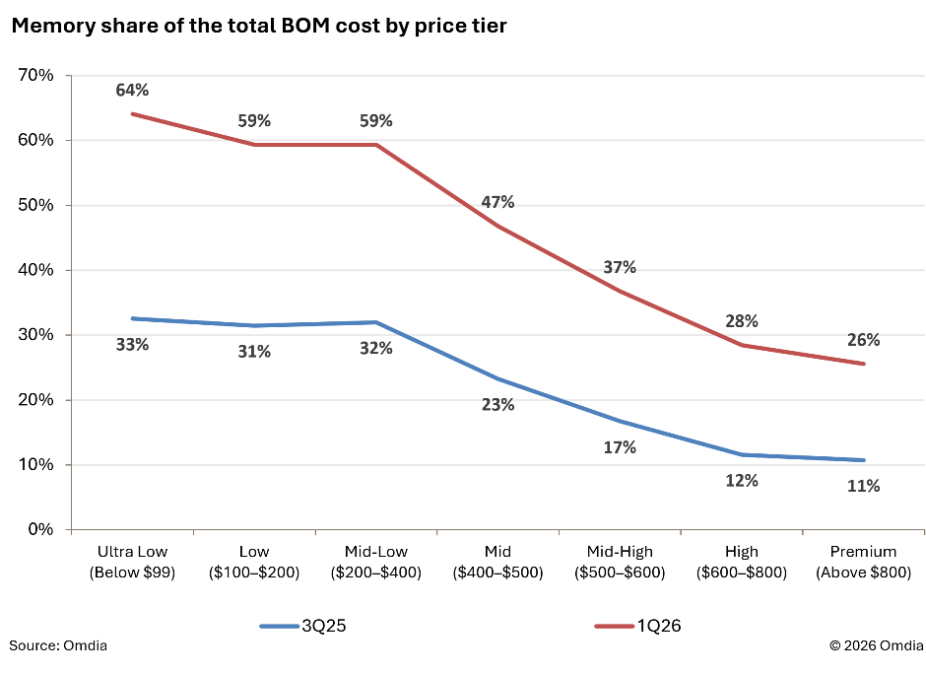
Omdia’s Quarterly Smartphone Technology Trends – 1Q26 Analysis Premium indicated that memory has become the largest bill of materials (BOM) component in smartphones, particularly in the budget segment, accelerating the decline of affordable devices.
Omdia said the rising cost of memory has become a major burden for smartphones priced below $400, contributing to a year-on-year decline of more than 22 percent in this segment during 2026. The report highlights that the smartphone cost structure has changed dramatically between 3Q25 and 1Q26, with memory accounting for an increasingly larger share of total manufacturing cost, the latest Omdia report said.
In 1Q26, memory represented nearly 60 percent of the total BOM cost for smartphones priced below $400, while devices priced below $99 saw memory account for more than 64 percent of total manufacturing costs. Compared with 3Q25, the memory cost share nearly doubled in the sub-$400 segment and increased by more than 100 percent in smartphones priced above $400.
To offset rising memory costs, smartphone manufacturers are reducing spending on components such as display panels, camera sensors, and radio frequency (RF) modules, where supply remains plentiful. However, Omdia noted that budget smartphones already operate on extremely tight cost structures, leaving little room for further cost reductions.
According to Zaker Li, Principal Analyst in Omdia’s consumer research team, the situation is expected to worsen as memory prices continue rising over the coming quarters. Smartphone brands including Transsion, OPPO, vivo, Honor, and Xiaomi are increasing retail prices to preserve already thin profit margins.
Higher prices, however, are expected to reduce demand because entry-level smartphone buyers remain highly price-sensitive. Omdia believes many low-end smartphone models are becoming unprofitable, prompting vendors to gradually withdraw from the budget market during 2026.
Omdia’s latest forecast, released in May, projects the global smartphone market will decline by 12 percent year over year in 2026, primarily due to the sharp contraction in smartphones priced at $400 and below, where shipments are expected to fall by more than 22 percent.
In contrast, smartphones priced above $400 are forecast to grow by 5.7 percent in 2026. Omdia attributes this resilience to manufacturers shifting their focus toward premium devices, continued retail price increases pushing more products above the $400 threshold, and stronger purchasing power among premium smartphone buyers.
The report also notes that premium smartphones provide greater opportunities for cost optimization because memory represents a smaller proportion of the total BOM as device prices increase. In smartphones priced above $600, higher-cost components such as the System on a Chip (SoC), premium displays, and advanced camera modules occupy a larger share of manufacturing costs, allowing vendors to offset memory inflation more effectively.
To manage costs, smartphone makers are increasingly replacing LTPO OLED displays with LTPS OLED panels in selected high-end models, generating savings of around $3 to $5 per device while reserving LTPO technology for flagship products. Manufacturers are also adopting more flexible camera configurations by using smaller image sensors or reducing the number of cameras based on product positioning.
The SoC remains the single largest cost component in smartphones priced above $600. Vendors can lower manufacturing costs by extending the lifecycle of previous-generation chip platforms, potentially reducing SoC costs by approximately 30 percent to 40 percent.
Omdia concludes that persistent increases in memory prices are reshaping smartphone economics, forcing manufacturers to carefully balance affordability, profitability, and product competitiveness while accelerating the industry’s shift toward higher-value smartphones.
BABURAJAN KIZHAKEDATH