
Australia’s online safety regulations have sparked a surge in downloads of virtual private networks (VPNs) and prompted major adult content platforms to restrict access for Australian users. The country has introduced some of the world’s strictest internet age verification rules, targeting social media access for teenagers and limiting minors’ exposure to harmful online content such as pornography, extreme violence, and self-harm material.
Australia Tightens Online Safety Rules for Minors
In December, the Australian government implemented a law banning teenagers from using social media platforms nationwide. The legislation positioned Australia as the first country to introduce a nationwide restriction on underage social media usage, Reuters news report said.
In addition, a separate regulatory framework requires artificial intelligence powered chatbot services to prevent minors from accessing sensitive content. This includes material related to pornography, extreme violence, self-harm, and eating disorders. Companies that fail to comply with the regulations can face penalties of up to A$49.5 million, equivalent to about $34.5 million.
These policies are part of a broader effort to strengthen digital safety standards for children and teenagers.
Age Verification Requirements Expand Across the Internet
Australia has also aligned with several other jurisdictions implementing stricter age verification rules for adult content. Countries including the United Kingdom and France, along with dozens of U.S. states, now require websites that distribute pornography to verify that users are at least 18 years old.
Under the Australian framework, app stores must conduct age verification checks before allowing users to download software categorized as suitable only for adults. The measure is intended to prevent minors from accessing restricted applications or services.
eSafety Commissioner Defends New Regulations
Australia’s eSafety Commissioner Julie Inman Grant said the new regulations aim to bring the same safeguards that exist in the physical world into the digital environment.
According to Grant, society already imposes strict age limits in offline settings. Children cannot legally enter bars, casinos, strip clubs, or adult retail stores. The government’s objective is to ensure similar protections apply online.
She noted that the new rules extend long standing social safeguards to digital platforms where minors are increasingly exposed to inappropriate material.
VPN Downloads Surge Following New Restrictions
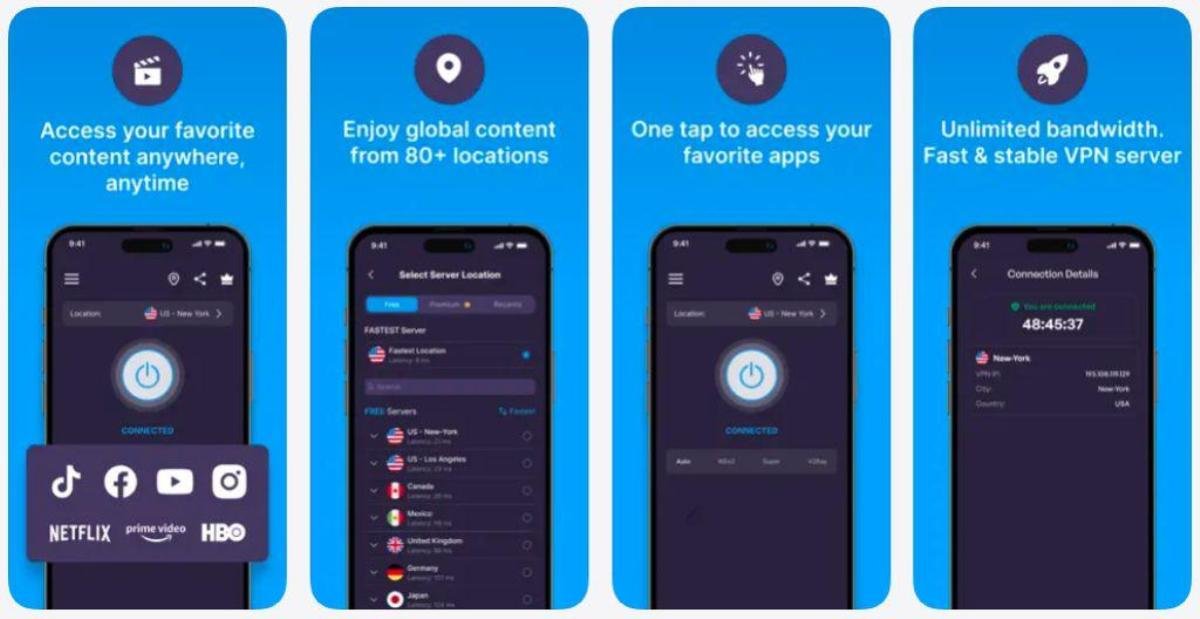
As the rules came into force, Australians began downloading VPN applications in large numbers. Data published by Apple showed that three of the 15 most downloaded free smartphone applications in Australia on Monday were VPN services.
The most downloaded app, VPN – Super Unlimited Proxy, ranked higher than any social media platform in Apple’s download chart.
VPN services allow users to mask their geographic location by routing internet traffic through remote servers. Every internet connected device carries a unique digital identifier that reveals its location. VPNs replace this identifier with a different location, making it appear as if the user is browsing from another region.
This functionality can allow users to bypass regional restrictions imposed by websites or digital services.
Adult Website Networks Restrict Australian Access
The new laws have also affected major adult entertainment platforms. Canada based company Aylo, which operates a large network of pornography websites, announced restrictions for Australian users.
The company blocked access to platforms such as RedTube and YouPorn for users in Australia. It also modified access to Pornhub, offering only a version without explicit content.
Visitors to the affected websites saw notices stating that the platforms were not currently accepting new account registrations from users in Australia.
Aylo said it had implemented similar restrictions in several regions including the United Kingdom, France, and multiple U.S. states due to what it described as ineffective and inconsistent age verification laws.
Digital Rights Advocates Highlight Privacy Concerns
Digital rights advocates say the spike in VPN downloads was expected following the introduction of strict online restrictions.
Tom Sulston, deputy chair of advocacy organization Digital Rights Watch, noted that many users are turning to VPNs not only to access restricted websites but also to enhance online privacy.
According to Sulston, VPNs can offer broader benefits by helping users protect their internet activity from surveillance or tracking when browsing online.
Debate Continues Over Online Safety and Privacy
Australia’s sweeping online safety framework has triggered an ongoing debate between child protection advocates, technology companies, and digital rights groups.
Supporters argue that stricter controls are necessary to protect minors from harmful content in an increasingly digital society. Critics, however, warn that enforcement challenges and privacy concerns could lead to unintended consequences, including widespread use of tools designed to bypass restrictions.

