

Verizon demonstrated the scale of its telecom infrastructure during the FIFA World Cup 2026 in the United States by carrying nearly 500 terabytes (TB) of data across all stadiums hosting tournament matches, including the final. The total data traffic is equivalent to streaming HD video continuously for more than 30 years, highlighting the unprecedented mobile connectivity demand generated by the global sporting event.

The tournament final alone generated 29.2 TB of data traffic on Verizon’s network, with uplink traffic surging nearly 70 percent during the halftime show as fans shared videos, photos, and live content from the stadium.
As the Official Telecommunications Services Sponsor of the FIFA World Cup 2026, Verizon expanded network capacity across every U.S. host stadium by three to five times to accommodate millions of connected devices and the sharp rise in mobile data usage during matches.
To strengthen in-stadium connectivity, Verizon installed thousands of concealed antennas beneath spectator seats along with large ball-shaped antennas targeting upper seating sections. The operator also deployed a Private 5G network to power the Lenovo Referee View body cameras, enabling fans worldwide to experience live matches from the referee’s on-field perspective.
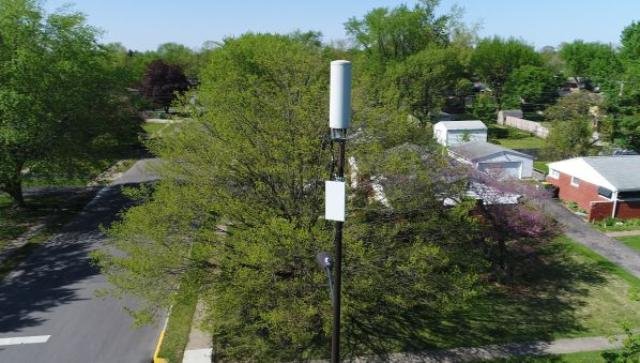
Verizon also enhanced connectivity beyond stadiums by deploying nearly 140 small-cell projects and temporary cell sites to support transportation hubs, FIFA Fan Festivals, and public watch parties, ensuring reliable mobile services for visitors throughout the tournament.
For global broadcasting, Verizon built a dedicated digital transport network supporting every FIFA broadcast across 16 stadiums in three countries. The company added 80,000 miles of fiber, enough to circle the Earth more than 3.2 times, creating a high-capacity backbone that delivered every camera feed without latency or frame drops to FIFA’s International Broadcast Center before distribution to billions of viewers worldwide.
The company said these infrastructure investments will continue to benefit host cities after the tournament, with permanent network upgrades and expanded 5G coverage providing faster and more reliable connectivity for local residents and businesses well beyond the FIFA World Cup.
Verizon invested $4.2 billion in capital expenditures during Q1 2026, keeping its network investment program on track across both wireless and fiber infrastructure. The company reaffirmed its full-year 2026 capital expenditure guidance of $16.0 billion to $16.5 billion, reflecting continued spending on strategic network expansion rather than increasing overall investment levels.
The company’s capital investments are focused on expanding fiber infrastructure, accelerating the deployment of 5G mobility networks, increasing network capacity, and integrating assets acquired through the Frontier Communications acquisition.
Verizon is also investing in putting its wireless spectrum assets, including C-Band and millimeter wave spectrum, into commercial service, while enhancing network performance and efficiency. Beyond physical infrastructure, capital spending supports advanced IT systems, data platforms, and technologies that improve network automation and customer experience.
BABURAJAN KIZHAKEDATH